Working at Heights, Done Safely — What It Means for Your Building
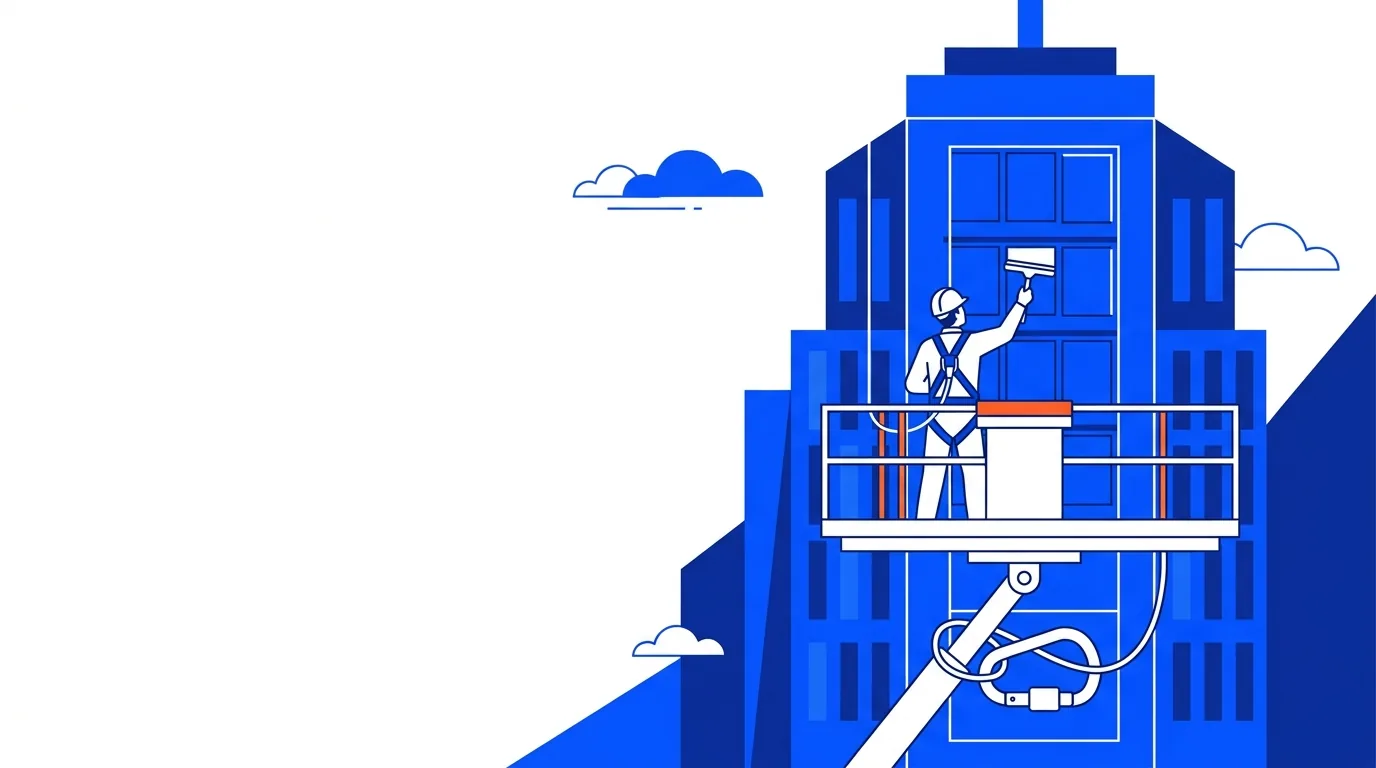
Nobody on your committee wakes up thinking about a cleaner forty metres off the ground. And that’s exactly the point. When working at heights is done properly, you never have to think about it. The windows get clean, the team goes home, and the only thing anyone notices is the light coming back in.
It’s when it goes wrong that everyone suddenly has a lot to think about.
So let’s talk about it plainly. Not the red-tape version. The human one.
What “working at heights” actually means up there
A multi-storey building looks simple from the footpath. Glass, walls, a few balconies, maybe a tricky bit over the entrance. But the moment someone has to get to that glass, gravity stops being an abstract idea and becomes the single most important fact of the day.
There’s no small fall from height. That’s the honest part. On the ground, a slip is a bruise and a story for the lunchroom. Three storeys up, the same slip is a life. Same person, same moment of carelessness — wildly different ending.
That gap is the whole reason any of this matters. Everything a proper cleaner does — the training, the gear, the paperwork you’ll never read — exists to close it.
The genuine risk of getting it wrong
Here’s a thing people don’t say out loud. A lot of height work goes fine for years on luck alone. Someone leans a ladder against a render wall, balances a bucket, reaches that one last pane, and gets away with it. Then they do it a hundred more times. The trouble with luck is it doesn’t send a warning before it runs out.
When it does run out on your building, it’s not only the worker who’s exposed. It’s you.
If an uninsured, untrained person is hurt doing work for your owners corporation or your facility, the questions land at the committee’s door. Who hired them? Were they qualified? Was there a plan? Was there insurance? Those aren’t questions you want to be answering after the fact. And “they seemed like a nice bloke and the quote was cheap” is not, sadly, a defence.
This is the bit that catches good people out. You weren’t being reckless. You were being thrifty. But the few hundred dollars saved on a quote can end up carrying a risk worth a great deal more.
What a properly set-up team actually brings
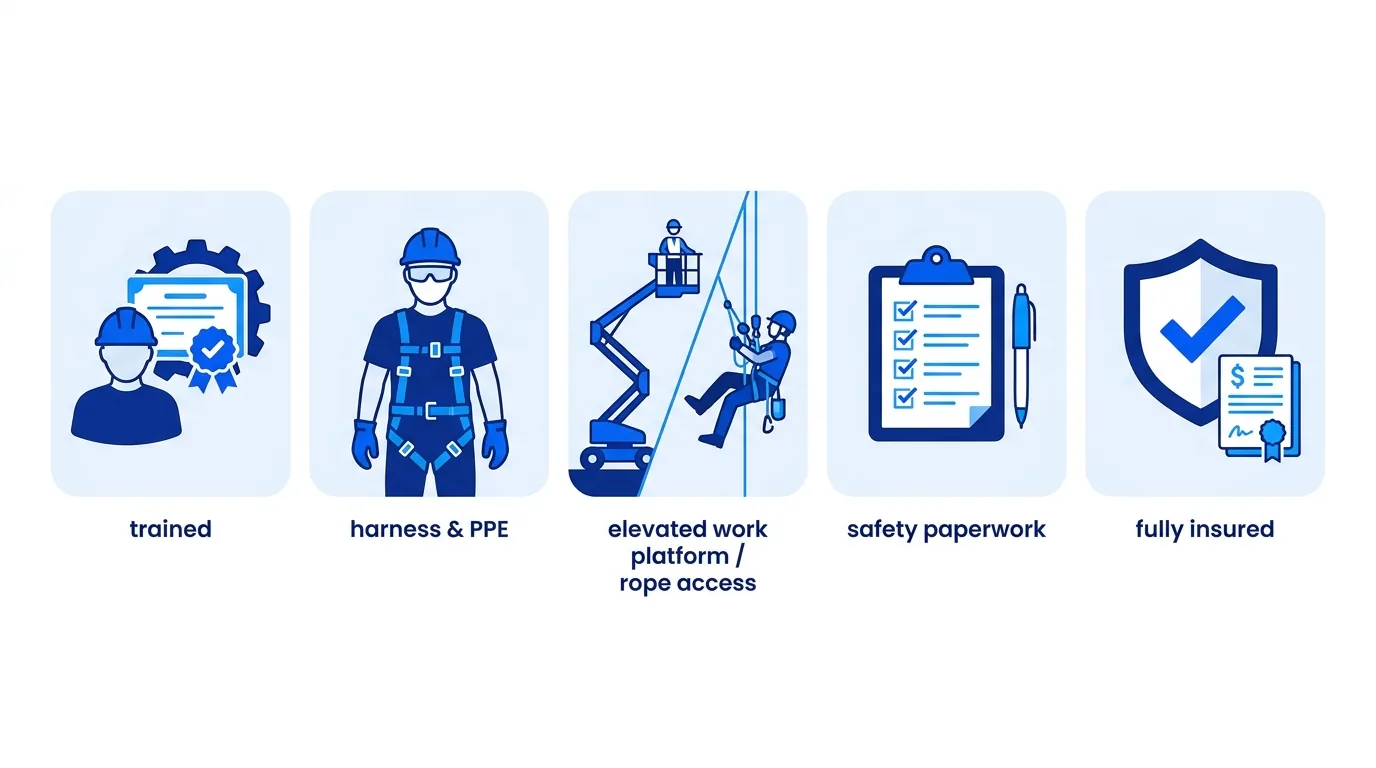
So what does “done safely” look like in practice? It’s not one heroic safety officer. It’s a handful of ordinary, unglamorous things, all in place before anyone leaves the ground.
- Working-at-heights training. Real, current certification — not a YouTube video and a good attitude. The team knows how to anchor, how to rig, how to recognise the day the wind says no.
- The right equipment for the right building. Harnesses and anchor points where they belong. Elevated work platforms (the cherry pickers and scissor lifts) where the access suits them. Rope access where it doesn’t. Water-fed poles to do from the ground what used to mean a ladder. The skill is matching the method to your building, not forcing your building to suit the method.
- A Safe Work Method Statement (SWMS). This is the plan, written down before the job, that says what we’re doing, what could go wrong, and how we’ve made sure it won’t. It sounds like paperwork. It is paperwork. It’s also the difference between a team that has thought about your building and one that’s about to improvise on it.
- Full insurance. Public liability and workers’ compensation that actually covers height work. So if the worst happens, the cover sits with the cleaner — not with your committee’s budget and your committee’s sleep.
- Police-checked, accountable people. Because you’re letting them onto your roof, your balconies, and past your residents’ windows. You should know who they are.
None of that shows up in the finished window. That’s the funny thing about safety done well — it’s completely invisible right up until it’s the only thing that matters.
Why the paperwork isn’t red tape
I get why “compliant” makes people’s eyes glaze. It sounds like a hurdle someone invented to slow you down. But flip it around for a second.
A SWMS isn’t there to annoy you. It’s the cleaner proving they’ve thought the job through before they’re suspended off the side of your building. Insurance certificates aren’t there to pad a folder. They’re the promise that if something goes sideways, you’re not the one left holding it. Training records aren’t box-ticking. They’re the reason the person above your residents knows precisely what they’re doing.
Every piece of that compliance is really just a different way of saying the same thing: everyone here goes home tonight, and you’re not exposed if they don’t.
That’s not bureaucracy. That’s care, written down so it can be checked.
What to ask before you sign anything
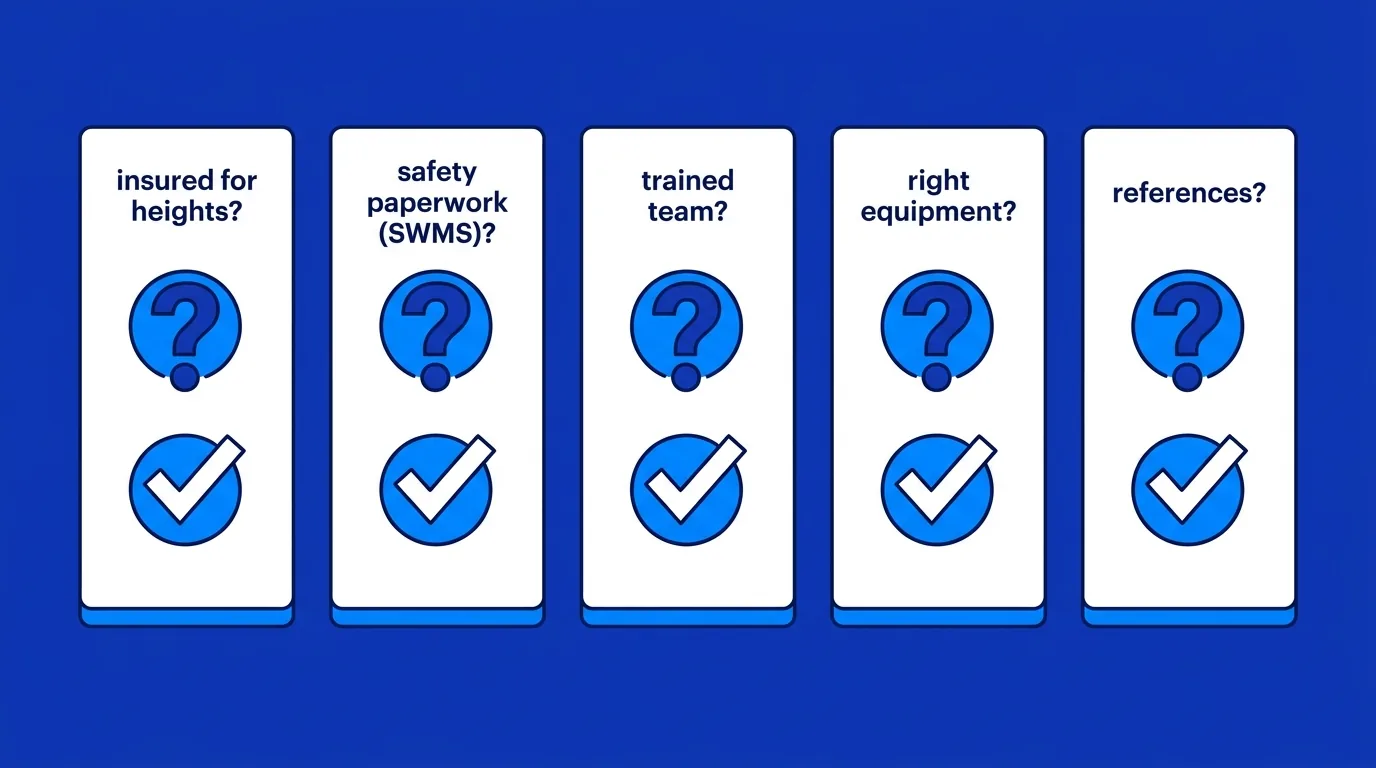
You don’t need to be a safety expert to protect your building. You just need to ask a few honest questions and pay attention to how comfortably they’re answered. A good operator won’t flinch. They’ll be glad you asked.
- Can I see your current public liability and workers’ compensation insurance?
- Will you provide a SWMS for this specific job before you start?
- Is your team trained and certified for working at heights?
- How will you access the high glass — EWP, rope access, water-fed pole — and why that method here?
- Are your people police-checked?
If the answers come back clear and without fuss, that tells you most of what you need to know. If they come back vague, or a bit defensive, that tells you the rest. Trust how a question is answered as much as the answer itself.
If you’d like a fuller picture of what good commercial exterior cleaning involves beyond just the safety side, our commercial cleaning guides walk through it in plain language.
How we do it at Logiclean
We clean the outside of buildings across Melbourne, and a fair bit of that work happens well off the ground. So we’ve made the unglamorous stuff non-negotiable.
Our team is fully insured and police-checked. We’re trained and certified for working at heights, and we choose the access method to suit your building — EWPs, rope access, or water-fed poles from the ground where that’s the safer call. Every height job comes with a SWMS done before we start, not scribbled afterwards. We show up when we say we will, we work tidy, and we back the result with a guarantee.
We’re strict about safety and easy to have around. Both, at once. That’s the goal.
Frequently Asked Questions
Because the price includes the things that protect you — insurance that covers height work, trained people, proper access equipment, and the time to plan the job safely. The cheaper quote often isn’t cheaper. It’s just moved the risk onto your building without telling you.
A Safe Work Method Statement. It’s a short document, written before the job, that sets out what’s being done, what could go wrong, and how those risks are controlled. For your committee, it’s proof the work was planned properly rather than made up on the day.
It’s exactly the kind of question that gets asked after something goes wrong. Hiring a fully insured, properly trained team is the simplest way to keep that exposure off your committee. We’re always happy to provide our certificates so you’ve got them on file.
An EWP — an elevated work platform, like a cherry picker or scissor lift — lifts the worker up on a stable platform. Rope access has trained technicians abseil down on rigged ropes. Each suits different buildings. The right choice depends on your access points, your surfaces, and what’s safest on the day — which is exactly what we work out before we start.
Where the building allows, water-fed poles let us reach high glass from the ground using purified water that dries clean and streak-free. When that won’t reach safely, we use an EWP or rope access instead. The method follows the building — never the other way around.
Let’s keep your building safe and looking after itself
You shouldn’t have to choose between a clean building and a clear conscience. Done properly, working at heights gives you both — bright glass, a tidy facade, and the quiet certainty that everyone who worked on it went home safe and your committee isn’t carrying anything it shouldn’t.
Have a chat with us. Get a quote, ask the hard questions, and see how it feels to have it answered straight. Book online at book.logiclean.com.au or call us on (03) 5905 9000. We’d genuinely love to help.